
DeSoto Released Mugshot Records
A booking photograph records a person's appearance during an arrest and intake process. Release does not turn that image into a new portrait, and it does not resolve the charge. The DeSoto County court record may later show dismissal, no-file action, plea, conviction, acquittal, or another disposition. The photo must not be used as a substitute for that outcome.
Florida's Constitution and Chapter 119 establish broad access to records made or received in official business, subject to exemptions. A government-held booking photograph is generally public unless a specific exemption, a sealing or expunction order, juvenile or confidential status, or an active-investigation basis applies. DCSO may review and redact a request. Public access also does not mean every photo remains in an online gallery.
The source should stay with the image. A DCSO photo identifies a county booking. An FDC image belongs to the state corrections profile and may be newer. An FDLE image belongs to a registry with narrow legal scope. None, standing alone, shows that a person is currently held or free.
Use the DeSoto County release-record search to confirm the booking, release event, court disposition, and any destination custody before attaching a status to a photograph.
- Booking photograph
- An image created as part of an agency's arrest and intake record.
- Sealed record
- A record restricted from ordinary public access under a court order and Florida law.
- Expunged record
- A record treated more restrictively after a court order, subject to statutory exceptions.
- Release detail
- The DCSO booking-level record reached from the official Released archive.
DeSoto Released Mugshot Sources
Photo discovery should begin with official sources and the correct custody system. DeSoto County has a strong released-record archive, but its grid does not show a photo column. Open the booking detail first. If no DCSO image is displayed, request that exact booking photograph instead of treating an unrelated state or news image as the county mugshot.
| Channel | Has a photo? | How to access it |
|---|---|---|
| DCSO Released detail | Check the individual detail; the grid has no photo column | Search the official Released archive and open the matched name |
| DCSO records request | May provide the public booking image | Identify the booking number and date through JustFOIA |
| FDC offender profile | Commonly includes an offender image | Use the state search only for a person in the Florida corrections system |
| FDLE registry | Generally includes a registry image for covered registrants | Use the official registry and label its limited scope |
| DCSO app and official news | Selective, not a released-photo archive | Check current-jail or cited agency news content |
| Local reporting or archive mirrors | May retain an agency-supplied image | Verify its date and source against DCSO; do not treat it as release proof |
The official DCSO Released grid displays release fields and links to individual records.
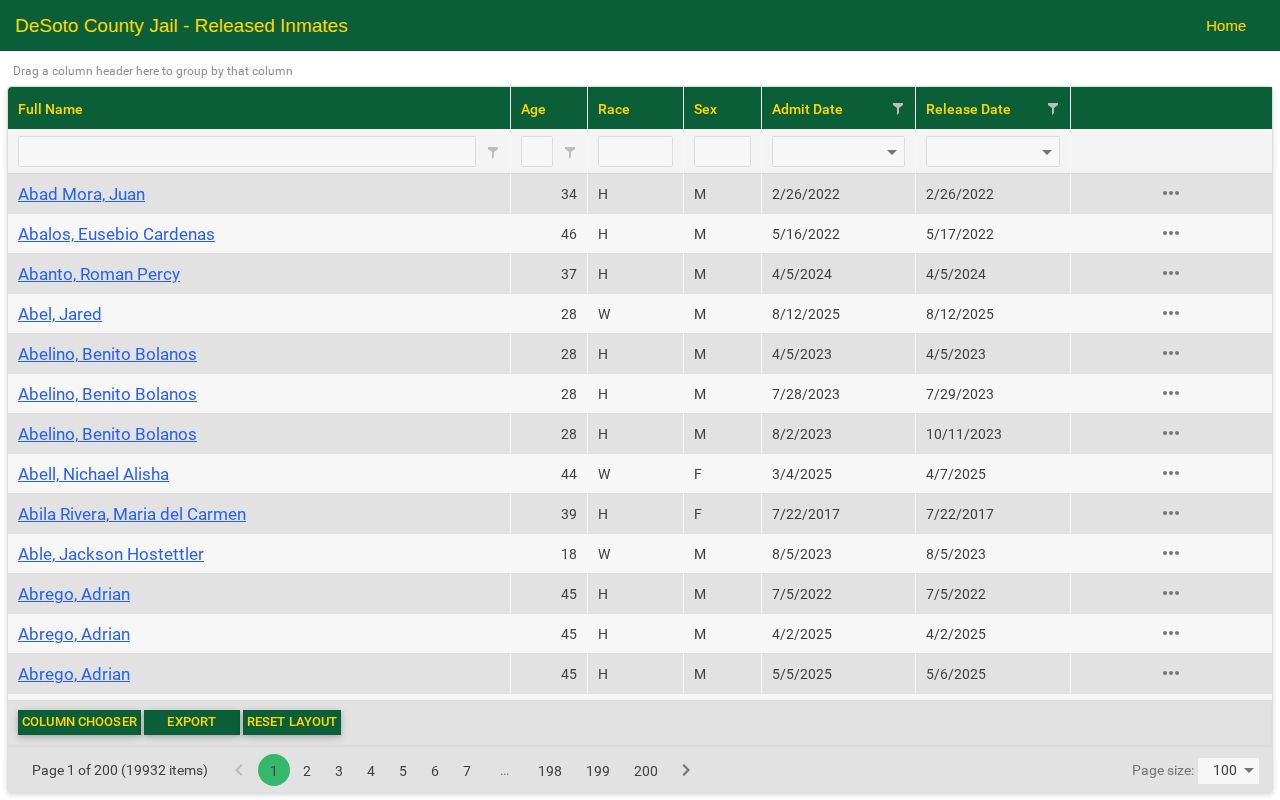
Its lack of a photo column means the next step is the booking detail or a focused agency request, not an assumption that no photo exists.
Note: Match the admit date, release date, age, charge or court type, and arresting agency before opening a common-name record.
DeSoto Mugshot Limits and Removal
DeSoto's released grid is a record index, not a mugshot gallery. This local design is important. Photo discovery proceeds through an individual detail or the DCSO public-records process. The grid's visible fields include Full Name, Age, Race, Sex, Admit Date, Release Date, and Time in Jail, while optional fields can add charge, court type, and arresting agency. Those facts help identify the correct booking even when an image is not shown.
Florida section 901.43 addresses a different setting: qualifying commercial booking-photo publications. A depicted person or legal representative may send a written request by registered mail to the publisher's registered agent with proof of identity and enough information to identify the photograph. A covered publisher must remove the photo without charge within 10 calendar days and may not republish or redisseminate it. The law permits remedies for noncompliance.
That statute is not a universal deletion rule for DCSO, FDC, every news report, or every official archive. It is limited to covered publications that seek removal payment or operate within the commercial mugshot-publication scope described by the law. A qualifying request also does not automatically erase the underlying government record. The official source and any separate sealing or expunction order must be assessed on their own terms.
Request a DeSoto Booking Photo
DCSO accepts public-record requests through its custodian at 208 E. Cypress Street, Arcadia, Florida, and through the official JustFOIA portal. Ask for an existing image tied to a defined booking. Florida law does not require a special phrase or a stated motive, but the name, booking number, and date range help staff locate the right record and avoid a broad search.
- Open the DCSO Released archive and match the booking through several public fields. Save the booking number or detail information if displayed.
- Go to the DCSO JustFOIA portal or contact the public-records custodian.
- Request the booking photograph for the named booking and date. Ask for the original electronic image and the releasable booking or release sheet if context is needed.
- Ask for an itemized estimate before charges are incurred. No fixed DCSO booking-photo fee was published in the researched source.
- Review the response for the exact booking and source label. Respect any lawful exemption, redaction, sealing, or expunction restriction.
Chapter 119 permits actual duplication costs and a reasonable special-service charge when extensive clerical, supervisory, or information-technology work is required. It requires a good-faith and prompt response, but sets no single statewide number of days for every request. The live estimate from DCSO controls.
The official DCSO request portal shows the categories and submission route for a trackable request.
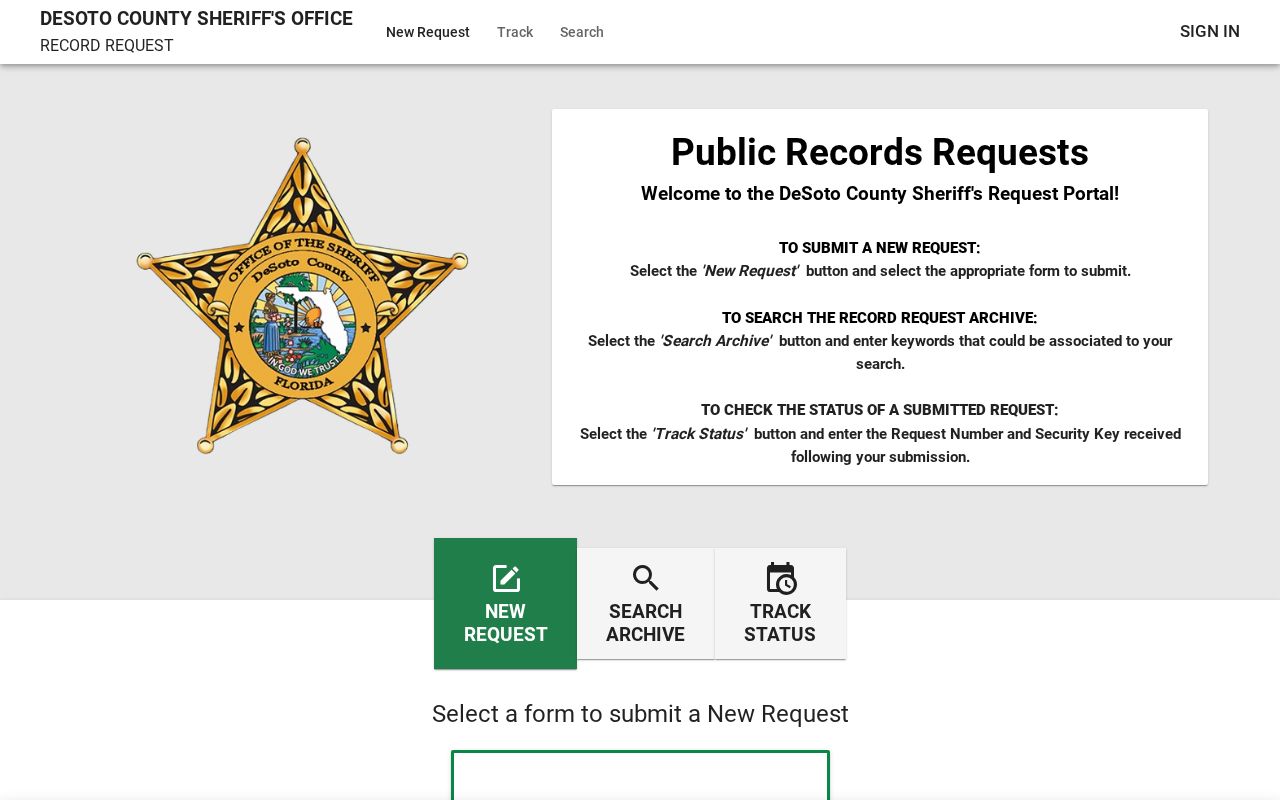
A narrow electronic-image request usually gives the custodian a clearer task than asking for every photo associated with a person's name.
Note: Records & Warrants uses option 2, extension 2626, on DCSO's main lines; Jail/Booking uses option 4, extension 2630.
State Images After DeSoto Release
FDC offender details commonly include a photograph for a person in state prison or state supervision. It is a state corrections image, not necessarily the DCSO booking photo. Use the FDC Offender Search only when the record path supports an FDC sentence or supervision link. Match the DC number, aliases, physical descriptors, offense history, and status rather than relying on the face alone.
The FDLE Sexual Offenders and Predators Search is narrower. It generally displays an image and status for a person legally required to register. Status options distinguish released, supervised, confined, absconded, civil commitment, deceased, and deported circumstances. A Released registry label describes the registrant's status within that system; it is not a county release list or a general criminal record.
The official FDLE registry search shows the specialized statewide image and status route.
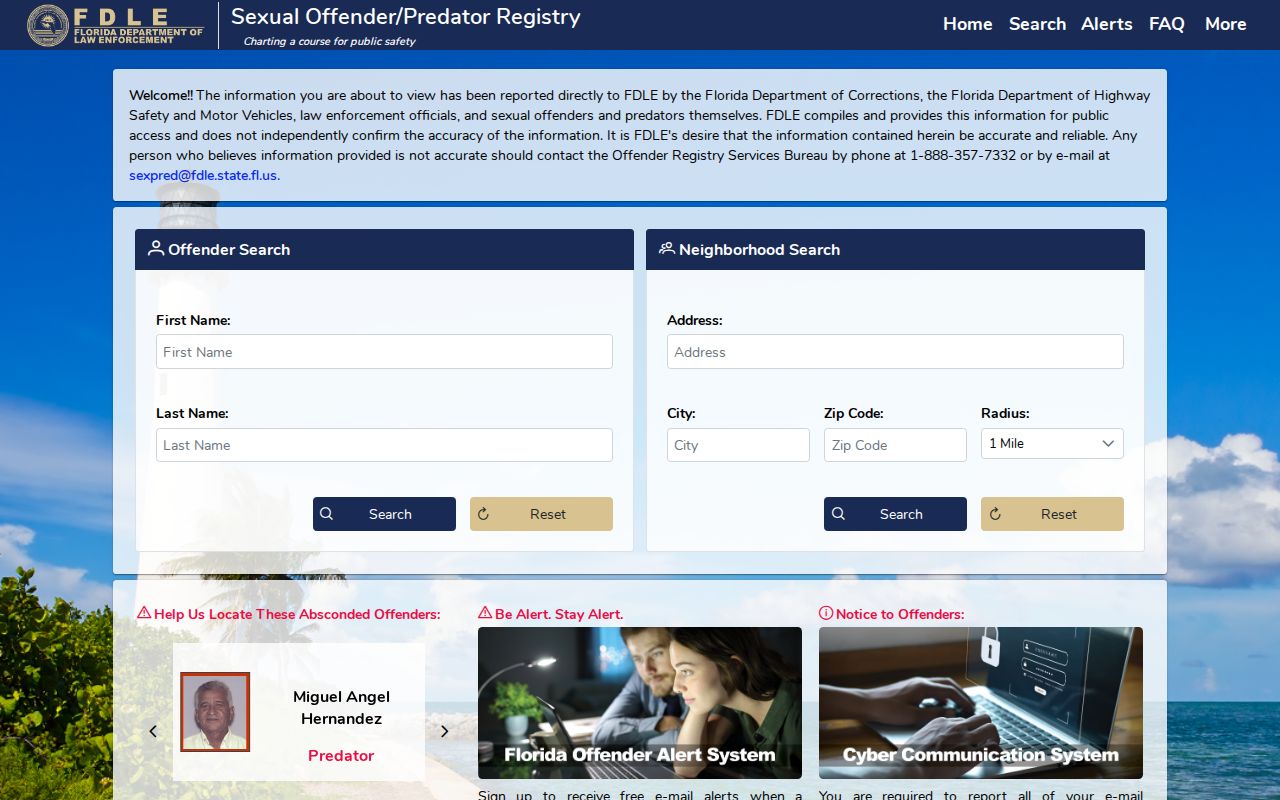
Use that image only within the registry's legal scope and retain the status and access date with any citation.
DeSoto Sheriff App Photo Limits
DCSO has an official mobile app in the Apple and Google stores. Its published description promotes “who is in jail” access and agency news. It does not advertise a released-inmate archive, a distinct mugshot gallery, or a one-day or three-day release-photo feed. The app can help check current custody or locate selected agency news, but the website's Released record remains the primary official route for a person who left the jail.
The distinction between news and release data is easy to miss. An agency news release is a press announcement. It is not a list of people released from custody. DCSO social or news posts may selectively show an arrest image, but the selection is incomplete and the post date may differ from the booking or release date. Cite the specific official post and confirm release in the agency record.
The official DCSO app listing describes its current-jail and agency-news scope.
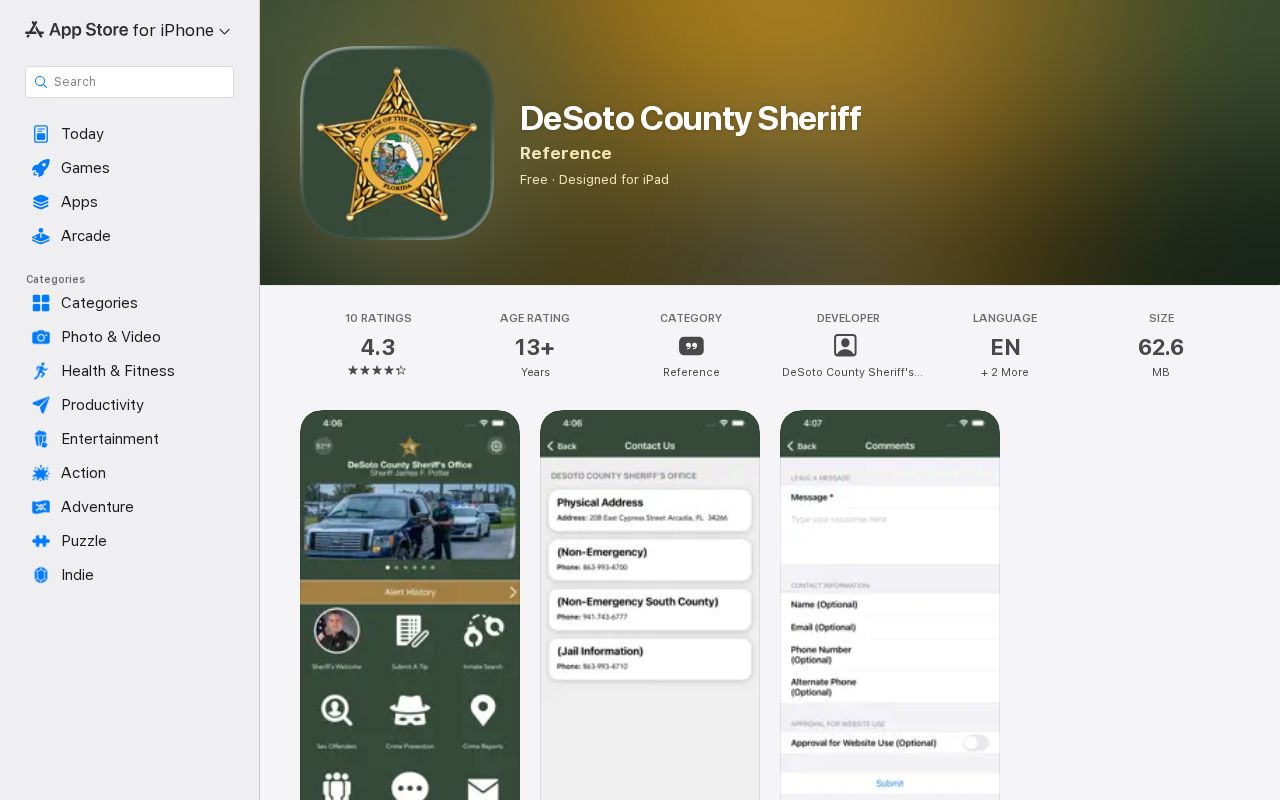
The app does not replace the Released database or a public-record request for a defined booking photograph.
Unofficial DeSoto Mugshot Copies
Local reporting may preserve an agency-supplied photo, and a third-party archive may mirror an old booking. These are discovery clues, not custody proof. Check the publication date, image credit, booking date, and named agency. Then compare the image and identity with DCSO, FDC, FDLE, or the court record as appropriate. A stale copy may omit a later dismissal, sealing order, corrected identity, or release.
No commercial mugshot publisher, data broker, or removal service is linked or endorsed. Paying a service does not establish what an official agency must do. If a photo is wrong or lawfully restricted, address the source record and the publisher through the applicable correction, removal, sealing, or expunction process.
The DeSoto County 24-hour releases can verify a recent DCSO departure when the image came from a current arrest or news post. A release entry confirms departure from that booking, not necessarily return to the community, because transfer to FDC, another jail, federal authority, ICE, or secure treatment remains possible.
DeSoto Mugshots After Record Relief
Florida sealing and expunction are court processes governed by sections 943.059 and 943.0585, with an FDLE certificate step for eligible applicants. The certificate is not itself the court order. A sealed record is generally restricted from ordinary public view. An expunged record receives more restrictive treatment, subject to statutory exceptions. Juvenile and other confidential records have separate protections.
If DCSO removes or withholds an image because of lawful relief, do not rebuild it from caches or an old mirror. A third-party copy does not override the court order or make the official record public again. Direct a correction or access question to the custodian that controls the image, and use the FDLE seal and expunge process for state procedure information.